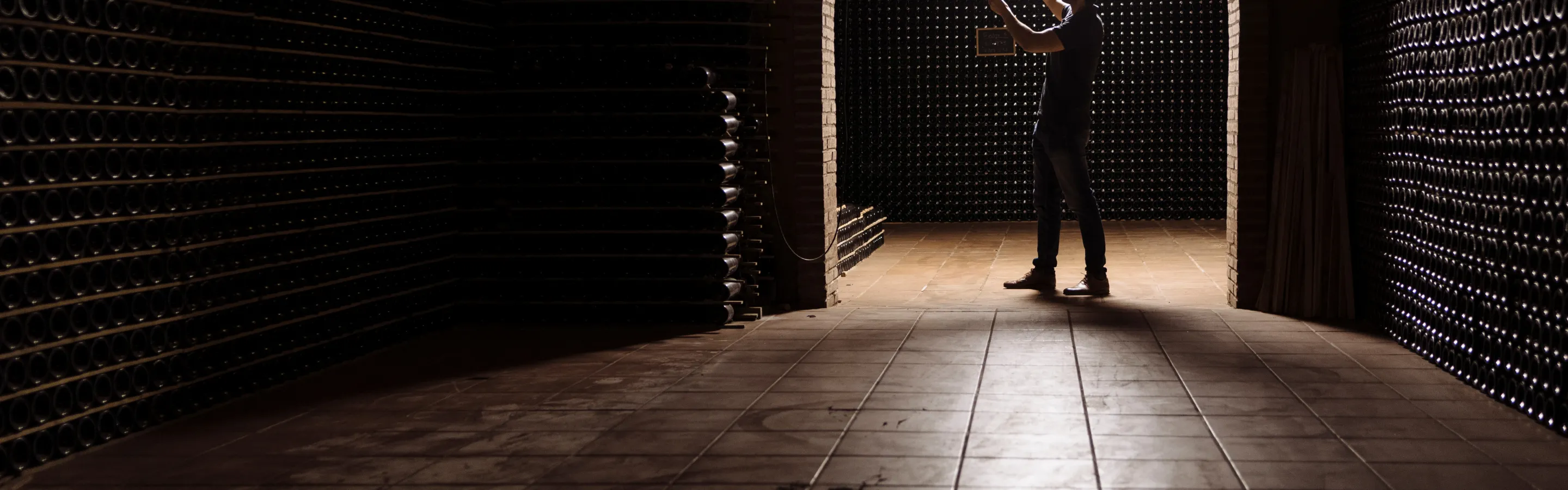
For generations, wine has occupied a special place between pleasure and investment. A great bottle is there to be enjoyed, but it can also represent a financial opportunity – through collecting or investing in the businesses behind it.
That’s certainly been the case for retired doctor and long-time wine collector, Ray Buttigieg.
Originally, he and his wife Mary bought wine simply to enjoy as it aged. But as their collection grew, it became more than they could ever drink themselves, and something of an all-consuming hobby.
As Ray says, “The trouble is it almost becomes a bit of an obsession once you start collecting wines.”
It’s one that can pay, though.
A Rousseau Grand Cru Chambertin that he purchased for around $400 at the turn of the century could fetch close to $4,000 at the height of COVID when demand for wine was especially strong.
| 2006 | 2026 | Price return % p.a* | |
Romanee-Conti (per bottle) | $3,500 | $25,500 | 10.40% |
| Penfolds Grange (per bottle) | $625 | $1,250 | 3.50% |
| S&P 500 (mid-year) | $1272 | $7,440 | 9.20% |
| ASX 200 (mid-year) | $5,130 | $8,760 | 2.70% |
| Cash | 3.25% |
*All returns reflect price movements only. Wine returns exclude storage, insurance and selling costs, while S&P 500 and ASX 200 returns exclude dividends and their reinvestment.
Source: Tim Eustace and The New York Financial Times
Part 1 When the numbers don't add up
Ray bought a considerable amount of Bordeaux early on in his collecting life, but it’s proving much harder to sell at attractive prices today.
Of course, not every bottle delivers.
“I’ve still got some lovely old Bordeaux. But trying to sell it now, you really don’t get your money’s worth,” he says.
In fact, Ray is far less likely to sell any of his wines these days. With resale prices down and auction house commissions of up to 18%, there can be little upside in putting a bottle under the hammer.
“If I see that I’m only getting maybe $10 over what I paid for the wine, I’d much rather keep it,” he says.
And for many collectors, there’s also the cost of storage to consider. While Ray has his own climate-controlled cellar, others may need to pay for commercial cellaring – potentially for decades.
Ultimately a wine producers success is going to depend on how fleet-footed they are and how they position their product into this changing market.
Changing tastes, changing value
Indeed, the current climate is likely giving many would-be investors pause for thought – whether they turn their hand to collecting or invest directly in wine producers themselves.
Global wine consumption has fallen to its lowest level since 1961 as the younger generations, in particular, show less interest. That’s especially marked in the United States where wine consumption has dropped by 73 million 9-litre cases between 2020 and 2025, according to IWSR data.1 China’s wine market has also witnessed a dramatic decline, falling 58% over the same period.2
Higher-end wines have proved more resilient. But resilience doesn’t necessarily mean standing still. Even at the premium end, tastes are changing – potentially shifting where collectors and investors see value.
Ironbark Private Wealth Financial Adviser Tim Eustace points to Grenache as an example. Once something of a poor cousin to Shiraz and Cabernet, its lighter, aromatic qualities are attracting renewed interest.
That could position Australia well though. “We’ve got lots of fine old Grenache in Australia,” Tim says. “The best of it you can pick up for $60 or $70, which compares very favourably with Shiraz and Cabernet of a similar quality.”
Ray has noticed a similar search for value among collectors. As top Burgundy has become increasingly expensive, he says some are turning to alternatives such as Italy’s Nebbiolo, including lesser-known regions such as Valtellina.
But today’s search for value can help create tomorrow’s higher prices. “People are starting to look at cheaper varieties, but as these cheaper varieties become more popular, their price is starting to rise as well,” Ray points out.
$97.3B
In funds under management, Trusteeship and advice (as at 30 June 2026).
670+
Dedicated professionals across Group, Advice, Private Wealth and Investment Solutions.
Part 2 When demand dries up
The problem is the current downturn is far from temporary.
Wine Australia points to a combination of economic pressures, shifting demographics, health trends and changing consumer behaviour reshaping the global wine market. As its Manager, Market Insights, Peter Bailey recently warned, “The challenges facing the wine industry are not short-term fluctuations that appear and disappear from one year to the next.”3
Perhaps the most visible evidence of this can be found in the vineyards themselves. In Bordeaux, almost 30,000 hectares of vines will have been uprooted across the region of recent years.4
It’s not alone. In fact, the industry still may have some way to go, according to Wine Australia. Its modelling suggests the global vineyard area could ultimately need to shrink by around 14% to bring production more closely into line with consumption.5
A changing wine map
One very real challenge that isn’t going away any time soon is climate change.
The 2026 season in France provides a stark example. Severe heat, drought and wildfires hit parts of the country, with the Agriculture Ministry forecasting one of its smallest wine harvests in decades – 17% below the 2021–25 average. Indeed, Champagne is forecast to produce 49% less wine than in 2025, while Burgundy-Beaujolais is expected to be down around a third.6
Yet a changing climate can create opportunities elsewhere.
“We’ve seen significant planting of different varietals, particularly sparkling wine, in places like southern England, where 20 or 30 years ago it was almost non-existent,” Tim points out.
In fact, Champagne house Taittinger has established a vineyard in Kent and Pommery in Hampshire – drawn in part by southern England's chalky soils and a climate increasingly suited to sparkling wine production.
The upside for drinkers? “If you’ve ever tasted a good-quality English sparkling, they are magnificent. They’re heady with citrus and have a freshness about them,” Tim says.
The need to adapt
For wine businesses, all this underscores how important it is to adapt.
“Ultimately a wine producers success is going to depend on how fleet-footed they are and how they position their product into this changing market,” Tim says.
Treasury Wine Estates is a case in point. Its shares reached almost $20 in 2018, amid strong demand for premium wine and rapid growth in exports to China. But by March 2026, they had fallen as low as $3.37 as weaker global demand and challenges in key markets weighed on the business.
There may be hope ahead. Shares have since recovered to around $5, as new CEO Sam Fischer pursues a major restructure aimed at creating a more focused business.
“It’s fascinating to see what’s happened with Treasury,” Tim says. “Fischer is undertaking significant structural changes to its portfolio of brands, moving it upmarket and jettisoning a whole lot of the secondary labels.”
More than money
For collectors, of course, the return on wine has never been purely financial.
“It’s an intellectual pursuit as well as a lifestyle one,” Tim says. “There’s also the conviviality of wine.”
That resonates with Ray. After decades of collecting, he believes his cellar has been a good investment for reasons that go well beyond its monetary value. “We’ve been enjoying some lovely wines and I’ve managed to sell some wines at a significant profit,” he says.
Perhaps that’s ultimately what makes wine such a singular investment. You can study markets, hunt for value and occasionally make a handsome return. But unlike most investments, if the numbers don’t quite stack up, you can always open the bottle.